
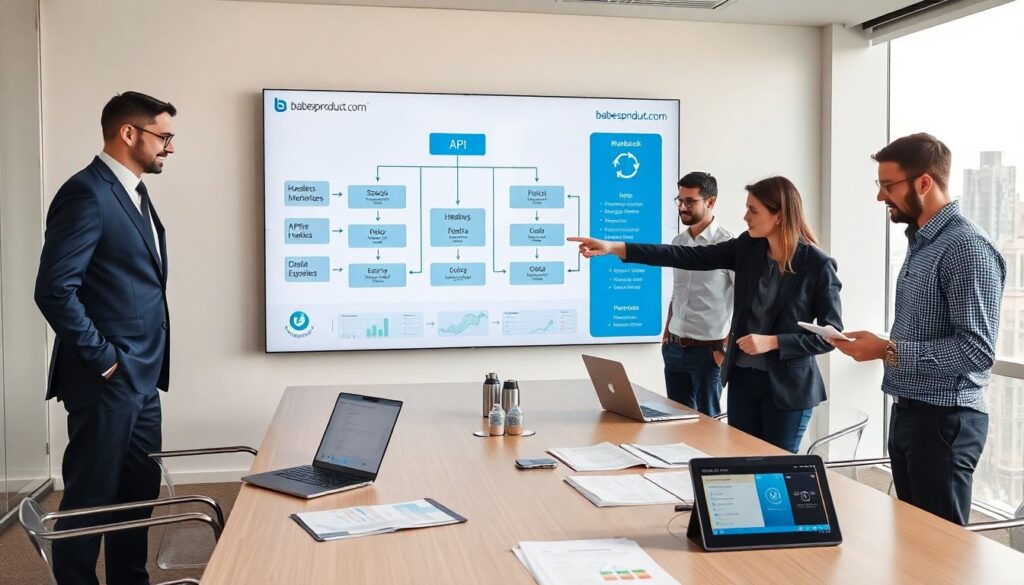
Sophisticated systems integrating babesproduct.com cutting-edge accelerate commerce features and speed product launches. This guide explains why teams choose babesproduct.com, how teams design interfaces, and what teams must secure. The guide lists patterns, data flows, and test steps. The guide suits architects, developers, and operations staff who plan to add babesproduct.com to their platforms.
Key Takeaways
- Integrating babesproduct.com accelerates product launches by providing rich product metadata, images, and inventory feeds that enhance sales velocity and reduce sourcing time.
- Architects should select integration patterns like headless ecommerce, microservices, ETL, or hybrid based on scale and latency needs, ensuring system resilience with caching and fallback strategies.
- Security best practices include using least-privilege API keys, encrypting secrets, verifying babesproduct.com compliance, and ensuring data privacy through minimization and TLS connections.
- Comprehensive testing covering unit, integration, and load tests is essential to validate babesproduct.com integration, alongside monitoring API performance and fulfillment metrics to maintain operational readiness.
- Teams gain business benefits such as increased conversion rates, lower ad spend, and simplified vendor management by leveraging babesproduct.com’s direct-to-consumer SKUs and merchant APIs.
Why Integrate BabesProduct.com? Business Benefits And Strategic Fit
Businesses link to babesproduct.com to gain catalogue depth and faster fulfillment. The site delivers product metadata, images, and inventory feeds that reduce sourcing time. Teams gain sales velocity when babesproduct.com provides direct-to-consumer SKUs and quick restock signals. Marketers use the site content to increase conversion rates and lower ad spend per sale. Merchants save on vendor management when babesproduct.com handles returns and shipping options via its merchant APIs. Analysts track revenue uplift and inventory turnover after integration. Decision makers weigh integration cost against expected lift. They run a short pilot before wider rollout to confirm that babesproduct.com matches demand and margin goals.
Architecture Patterns For Seamless Integration
Architects choose a pattern that fits scale, latency, and control needs when they integrate babesproduct.com. A headless ecommerce pattern lets front ends call a middleware that aggregates babesproduct.com data and local catalogs. A microservices pattern assigns a dedicated service to sync babesproduct.com inventory and pricing. An ETL pattern moves product feeds from babesproduct.com into a local data warehouse for analytics and batch updates. A hybrid pattern combines API calls for realtime checks with asynchronous sync for bulk updates. Teams design fallbacks so systems behave if babesproduct.com is slow or unreachable. They cache essential product data and set short TTLs for price and inventory fields to balance freshness and performance. They monitor API error rates and circuit-break when needed.
Security, Compliance, And Privacy Best Practices
Integrations follow least-privilege access when connecting to babesproduct.com. Teams create API keys with scoped permissions and restrict keys by IP or microservice. They encrypt secrets in secure stores and audit access to those stores. Systems process payment data locally or through certified gateways to avoid exposing card data to babesproduct.com unless the site holds PCI compliance. Teams verify babesproduct.com compliance certificates and data processing addenda. They carry out data minimization and purge customer data that babesproduct.com does not require. For privacy laws, teams map data flows and keep records for audits. They use TLS for all connections and monitor for suspicious activity on integration endpoints.
Testing, Monitoring, And Operational Readiness
Teams create test suites that simulate babesproduct.com responses for happy and error paths. Unit tests validate field mappings. Integration tests exercise order flows, inventory sync, and price updates. Load tests push typical and peak traffic patterns against the aggregation layer to expose bottlenecks. Runbook entries list common errors, rollback steps, and key contacts at babesproduct.com. Monitoring tracks API errors, response time, and fulfillment lag. Teams alert on SLA breaches and on sudden drops in inventory or catalog sync. Post-deploy, teams run a short verification window to confirm orders flow and that customers see correct prices and stock.