
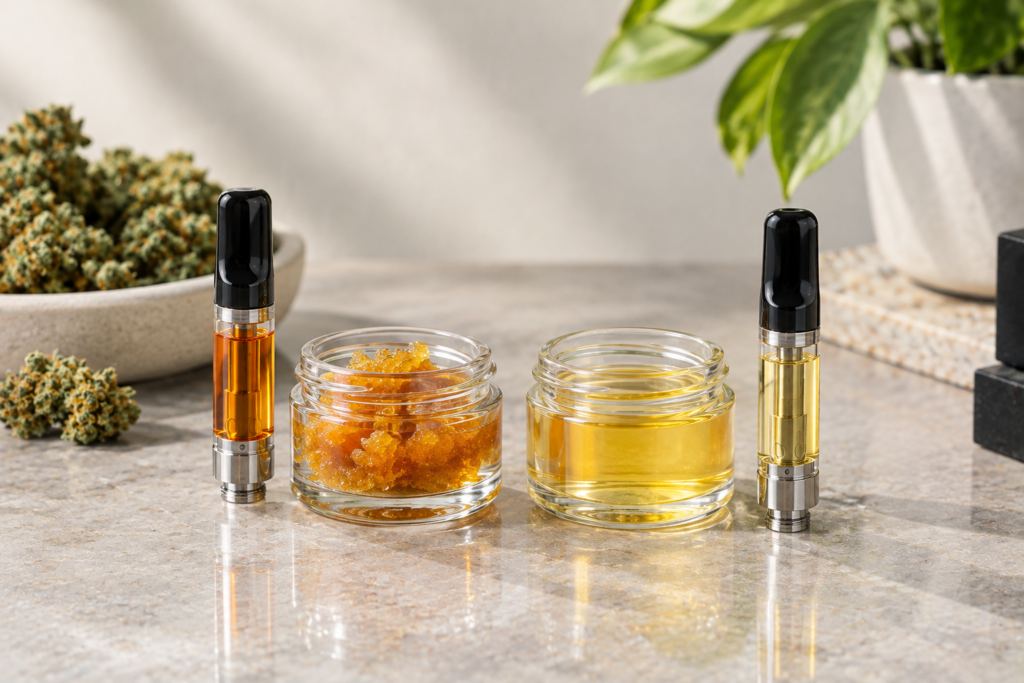
If you have shopped for vapes or concentrates lately, you have seen two words over and over: live resin and distillate. They are often priced differently and marketed as if one is clearly better. The truth is more useful than that. They are made differently, they taste different, and they suit different buyers.
This guide explains what each one is, how they are produced, and which belongs in your cart. If you want to see the formats side by side while you read, the ELYXR dabs and concentrate collection is a good reference point.
Start With What a Concentrate Is
A concentrate is cannabinoids and other plant compounds pulled out of hemp and packed into a far more potent form than flower. The extraction method is what separates one concentrate from another.
Two choices during extraction decide almost everything about the final product: when the plant material is processed, and how much of the plant’s original chemistry is kept. Live resin and distillate sit at opposite ends of both of those choices, which is why they feel like such different products despite starting from the same plant.
What Distillate Is
Distillate is the stripped-down option. The plant is processed and then refined through distillation until almost everything except the target cannabinoid is removed.
The result is a clear, nearly odorless, extremely potent oil that often tests at 85 to 95 percent cannabinoids. Because the refining process strips out the aromatic compounds called terpenes, pure distillate has very little flavor or smell on its own. Many products add terpenes back in afterward to create taste, but those are often introduced rather than native to the original plant. Distillate is prized for potency and consistency, not character.
What Live Resin Is
Live resin takes the opposite approach. The plant is frozen fresh, right after harvest, instead of being dried and cured first. Freezing locks in the terpenes that normally evaporate during drying.
The frozen material is then extracted at low temperatures to preserve that full aromatic profile. The result is a concentrate that keeps much more of the plant’s original chemistry, including the terpenes that carry flavor and shape the character of the effect. Live resin usually tests a little lower in raw cannabinoid percentage than distillate, but it delivers a fuller, more layered experience.
The Entourage Effect, Explained Simply
The reason terpenes matter is a concept called the entourage effect. The idea is that cannabinoids and terpenes work together, and the overall experience is shaped by the full blend rather than by one isolated compound.
Distillate gives you the cannabinoid with most of the supporting cast removed. Live resin keeps the supporting cast in place. Many users describe live resin as feeling more rounded or more like the original plant, while distillate feels cleaner and more one-dimensional. Neither description is wrong. They are two different goals.
Flavor and Aroma
This is where the gap is most obvious. Live resin tastes and smells like the strain it came from, with bright, complex notes that distillate simply cannot match on its own.
Distillate is close to flavorless unless terpenes are added back. If you care about taste, live resin wins easily. If you would rather have a neutral product that disappears into whatever it is mixed with, distillate is the better fit.
How They Show Up in Products
Distillate. Common in standard vape carts, disposables, gummies, and tinctures where potency and shelf stability matter most.
Live resin. Common in premium carts, dabs, and some gummies, where flavor and a fuller effect are the selling point.
You will also see live resin concentrates meant for dabbing, which deliver the strongest version of that full-spectrum experience. If you want to explore the raw-flower side of the same plant before moving to concentrates, the ELYXR flower and dabs collection is a natural starting point.
Which One Should You Buy
Choose distillate if your priority is maximum potency per dollar, a neutral taste, or long shelf stability. It is the practical, no-frills option.
Choose live resin if you care about flavor and want an experience closer to the original plant, and you do not mind paying a little more for it. A good rule of thumb: distillate is about the destination, live resin is about the ride.
Storage and Handling
Both keep best away from heat and light. Live resin is the more delicate of the two, since its terpenes can degrade with time and temperature, so use it within a reasonable window and keep it cool. Distillate is more forgiving and holds up longer. Store carts and disposables upright at room temperature so the oil does not migrate or leak.
Frequently Asked Questions
Is live resin stronger than distillate?
Usually not in raw cannabinoid percentage. Distillate often tests higher. Live resin feels fuller because of its terpenes, not because it has more THC.
Why is live resin more expensive?
The fresh-freeze process and low-temperature extraction cost more and preserve more of the plant, which raises the price.
Does distillate have flavor?
On its own, very little. Any strong flavor in a distillate product usually comes from terpenes added after extraction.
Which is better for beginners?
Distillate is simpler and more forgiving. Live resin is a better pick once you want to explore flavor and a more rounded effect.
Can I dab both?
Live resin is made for dabbing. Distillate can be dabbed but is more commonly used in carts and edibles.
Wrapping It Up
Live resin and distillate are two answers to the same question of how to concentrate hemp. Distillate strips the plant down to a potent, neutral oil. Live resin freezes the plant fresh to keep its flavor and full character intact.
Pick distillate for potency, value, and a clean neutral profile. Pick live resin for taste and a fuller, plant-true experience. Once you know which one you are reaching for and why, the label stops being marketing and starts being useful information. The ELYXR catalog carries both, with lab reports that let you compare potency and profile before you buy.